Loudest Guns With the Biggest Kick: Our Range Ranked
Which guns hit hardest and bark loudest? We rank the biggest-recoil, loudest firearms you can fire in Budapest — and what each one really feels like to shoot.
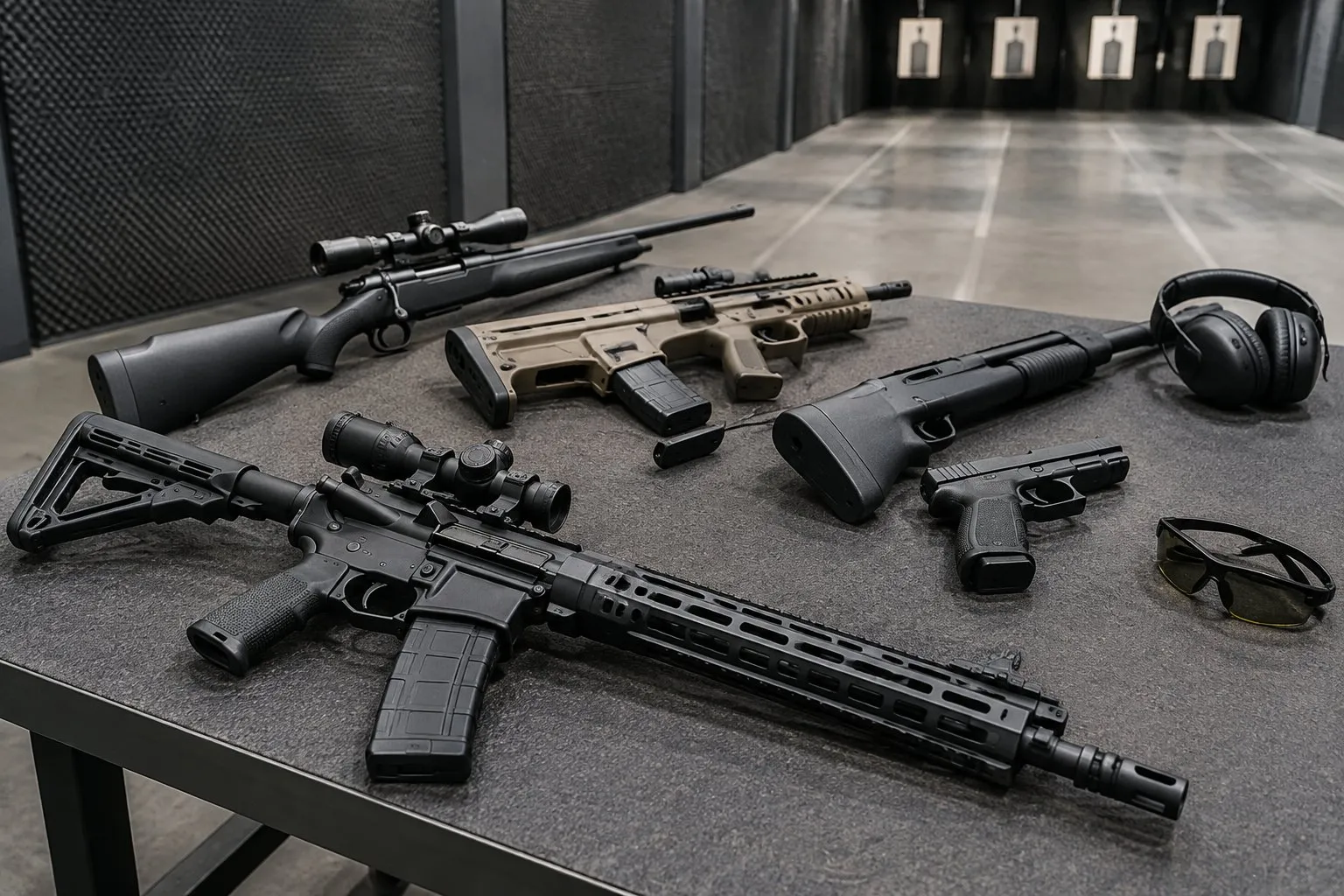
The Loudest, Kickiest Guns, Ranked: Noise vs. Recoil
There's a particular moment every first-time shooter remembers: the second before the trigger breaks, when you brace for a bang and have no idea how hard the gun is actually going to push back. Noise and recoil feel like the same thing in that split second, but they are measured differently and driven by different physics entirely.
Big-bore rifles such as the .50 BMG produce the loudest reported muzzle blast, while heavy-recoiling magnum revolvers and large-bore shotguns deliver the hardest felt kick, and the two rankings rarely line up. A firearm that cracks loudest in the ear is often milder in the hand than a shorter, lighter gun firing a heavy magnum cartridge. We see this play out regularly with guests at Churchill Shooting Range Budapest, where the collection spans historic WWII-era pieces through to modern rifles, pistols and shotguns, all fired under the supervision of our American and British veteran instructors. If you're curious which firearms top each list and want to try a few for yourself, our packages make that easy to arrange.
Which Firearms Top the Noise Rankings?
Reported gunshot noise is usually expressed as peak sound pressure level in decibels, and the figures published by hearing-protection specialists such as Pro Ears put unsuppressed large-bore rifles well above 160 dB, with some .50-calibre rifles cited above 180 dB. Those numbers come from measurement setups that vary by distance, microphone placement and ammunition, so treat them as a guide to rank order rather than a precise comparison between sources.
.50 BMG Rifles: Leading Contenders for Extreme Muzzle Blast
The .50 BMG cartridge sits at the top of most published noise charts, with Pro Ears citing figures around 180 dB for this calibre. The sheer volume of propellant burning and the pressure wave leaving a long barrel produce a blast you feel in your chest as much as hear. Anti-materiel rifles chambered in .50 BMG are built for distance and power rather than subtlety, and the report reflects that.
Magnum Rifles: Powerful Cartridges With a Deafening Report
Magnum rifle cartridges such as .308 are reported at approximately 167 dB, with 5.56/.223 carbines such as the AR-15 cited around 165 dB unsuppressed, according to figures published by hearing-protection researchers. The difference between those numbers and a .50 BMG is small on paper but noticeable in person, since decibels scale logarithmically. Guests trying our AR-15 often comment on the sharp crack rather than a deep boom, which fits that profile.
Magnum Revolvers: How Handguns Compete With Long Guns
Magnum revolvers punch above their size on noise, with sources citing .357 Magnum around 169 dB and other magnum handgun calibres reported between 163 and 169 dB depending on the specific load and barrel length. Short barrels and high chamber pressure push a lot of unburnt powder gas out at once, which is part of why a magnum revolver can sound as sharp as a rifle despite being far smaller.
How Do Ordinary Pistols and Shotguns Compare?
Standard pistols and shotguns generally sit lower on the published charts, though "lower" still means well above the threshold for hearing damage. A .45 ACP pistol appears in different sources at different decibel figures, and we would rather flag that inconsistency than present a single number as settled fact. Shotguns vary by load and choke, and every firearm on an indoor range, loud or louder, calls for proper ear protection throughout the session.
Which Firearms Deliver the Hardest Recoil?
Felt recoil depends on bullet weight, velocity, the firearm's own weight, and how that mass is distributed in the hand or shoulder, not on how loud the shot sounds. A heavy, slow-moving bullet from a light gun can shove harder than a fast, light bullet from a heavy one, which is why the recoil ranking and the noise ranking rarely match.
Heavy-Recoiling Rifles: Why Firearm Weight Changes the Ranking
Rifle recoil swings enormously with firearm weight and cartridge choice. A big-bore hunting rifle in a heavy dangerous-game chambering can deliver a slow, rolling shove into the shoulder, while an anti-materiel rifle such as the Barrett M82A1 in .50 BMG is frequently cited as one of the hardest-kicking rifles despite its size, because the cartridge's raw power outpaces even a heavy receiver's ability to soak it up. Lighter sporting rifles in standard calibres feel comparatively gentle by contrast.
.500 S&W and .454 Casull Revolvers: Concentrated Kick in the Hands
The Smith & Wesson Model 500 chambered in .500 S&W Magnum is widely treated as a benchmark for brutal handgun recoil, launching heavy bullets with a large powder charge that drives the grip hard into the palm. The Ruger Super Redhawk in .454 Casull sits close behind, operating at pressures well above traditional revolver rounds and producing noticeably higher recoil energy than a .44 Magnum in a similarly weighted gun. Full-power .44 Magnum loads remain demanding in their own right, particularly from shorter barrels or lightweight frames where there is less mass to absorb the impulse.
Magnum Shotguns: A Substantial Push Into the Shoulder
Heavy 12-gauge magnum loads and 10-gauge shotguns are commonly identified as among the hardest-kicking shoulder guns, since a large shot charge moving at speed sends a broad, thumping push rather than the revolver's sharper snap. Anyone who has fired a Remington M870 with full-power buckshot knows the shoulder push arrives as one solid, unmistakable event rather than a quick jolt.
Why Muzzle Brakes Can Reduce Kick but Increase Blast
Muzzle brakes redirect propellant gas sideways and rearward to cut felt recoil, which works well on paper and in the shoulder. That redirected gas increases noise and blast for the shooter and for anyone standing nearby, since the brake vents muzzle gas outward rather than letting it dissipate forward. Porting and brakes are a genuine recoil-reduction tool, but they trade comfort in the hands for a sharper experience on the ears.
How Can You Experience Powerful Firearms at Churchill Shooting Range Budapest?
Trying a loud or hard-kicking firearm for yourself is straightforward at Churchill Shooting Range Budapest, where instructor-led sessions let first-time shooters and seasoned visitors handle everything from historic WWII pieces to modern rifles and shotguns. Every visit includes a safety briefing, provided ear and eye protection, and an instructor standing beside you for every shot.
Choosing a Package for Your Experience and Comfort Level
Our Recruit package gives a roughly 30-minute introduction well suited to guests easing into louder, harder-kicking firearms gradually, while the Gamer package remains our most popular choice for visitors who recognise their firearms from first-person shooter games. The All-in package extends the session to around an hour with a broader firearm selection and more rounds, which suits guests keen to compare recoil and report across several guns in one visit. The Hollywood package uses lighter-weight firearm options built with first-time shooters in mind.
What Veteran Instructors Explain Before Your First Shot
Our American and British veteran instructors walk every guest through safe handling and what to expect from each firearm before a single round is fired. That includes a plain explanation of how a given gun will sound and push back, so nobody is caught off guard by a sharper crack or a heavier shoulder push than expected. Guests consistently mention instructors adapting the session to what they want to try, including some who upgraded a package on the day after seeing more of the collection.
Hearing Protection and the Realities of an Indoor Range
Ear and eye protection are provided for every guest, and they stay on throughout the session regardless of which firearm is being fired. Indoor ranges concentrate muzzle blast more than open-air shooting does, since walls and ceilings reflect sound back rather than letting it disperse, which makes consistent hearing protection essential rather than optional.
Checking Firearm Availability Before Booking
Weapon and ammunition availability can vary by day, so guests with a specific firearm in mind should get in touch before booking to confirm it will be on hand. Our weapons collection page lists what is typically available, and our contact page is the quickest route to check details ahead of a visit.
Choose the Experience, Not Just the Biggest Bang
Noise and recoil rank differently, and the firearm with the biggest reported decibel figure is rarely the one that pushes hardest into your hands or shoulder. A .50 BMG rifle tops the published noise charts, while .500 S&W and .454 Casull revolvers, heavy magnum rifles, and large-bore shotguns compete for the hardest felt kick instead.
Churchill Shooting Range Budapest gives visitors a supervised way to feel that difference firsthand, with hearing protection provided throughout and instructors on hand to explain what each firearm will sound and feel like before you pull the trigger. Picking a package built around your comfort level matters more than chasing the loudest or hardest-kicking gun on a list.
Frequently Asked Questions
Is the loudest gun always the one with the biggest kick?
No, muzzle blast and recoil are driven by different factors. A .50 BMG rifle ranks among the loudest firearms by reported decibel figures, but heavy magnum revolvers and large-bore shotguns often produce a sharper or heavier felt kick despite being quieter.
Does a .50 BMG rifle kick harder than a 12-gauge shotgun?
A .50 BMG rifle such as the Barrett M82A1 is frequently cited among the hardest-kicking rifles, but the comparison with a 12-gauge shotgun depends heavily on firearm weight, stock design and the specific load fired. Shoulder-fired long guns and anti-materiel rifles are different categories of firearm, so a direct one-to-one comparison needs that context rather than a single verdict.
Is a .45 ACP pistol louder than a 9mm pistol?
Published decibel figures for .45 ACP vary between sources, with some charts placing it above 9mm and others showing closer or conflicting results. Barrel length, specific ammunition and measurement conditions all affect the outcome, so treat any single number as approximate.
Do muzzle brakes make guns louder?
Yes, muzzle brakes and porting reduce felt recoil by redirecting propellant gas sideways and rearward, but that same redirection increases perceived noise and blast for the shooter and bystanders. The trade-off favours comfort in the hands over comfort for the ears.
Can beginners try powerful firearms at Churchill Shooting Range Budapest?
Yes, our packages, including Recruit and Hollywood, are built with first-time shooters in mind, and every session includes a safety briefing plus hands-on guidance from our American and British veteran instructors. No firearms licence or prior experience is required to take part under supervision.
Is hearing protection still necessary for a single shot?
Yes, a single unprotected shot can expose ears to sound pressure levels well above the threshold for permanent hearing damage. Churchill Shooting Range Budapest provides ear and eye protection for every guest, and it stays on for the entire session regardless of how many rounds are fired.